
The E92 M3 Development Begins
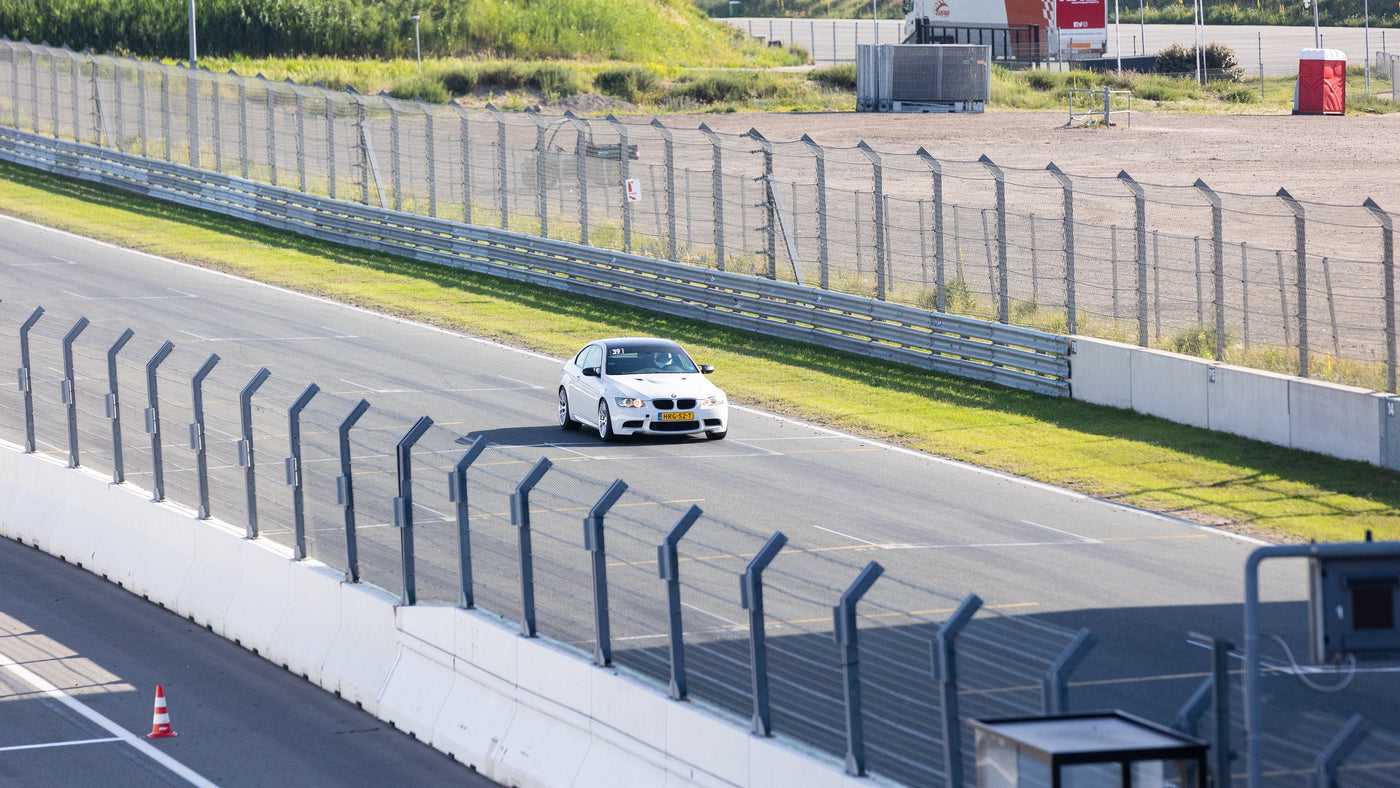
We've been quietly chipping away at a few E9X M3 components for a while now. But it's time to stop dabbling and go all in, to find out exactly how much clubsport experience we can pull out of the E92 M3. Before we change a single bolt, though, we need a number to measure everything against. So we set the standard the only way that counts: a completely stock E92 M3, on track, at Zandvoort.
01 — THE BASELINEWhy we start with nothing
It's tempting to throw a catalogue of parts at a car and call the result an improvement. The problem is you never actually know what each change did, or whether it was worth doing at all. So every ST programme starts the same way: bone stock, fully logged, so that every part we develop afterwards has to earn its place against a number we trust.
For the E92, that meant running it exactly as BMW built it, standard brakes, standard suspension, the original 19-inch wheels, and simply learning the car. We weren't chasing a lap time on day one. We were building a reference.

02 — BEHIND THE WHEELWhat a stock E92 M3 is really like
Right off the bat, the experience is genuinely special. There's so much feedback coming up through the steering wheel that you always know what the front axle is doing, and the S65 V8 behind it makes a noise that, frankly, is reason enough to start a project here at all. As a thing to sit in and drive hard, a stock E92 M3 still holds up beautifully.
“So much feedback through the wheel, and the noise is just incredible, but the moment you lean on it, the car shows you exactly where it gives up.”
— From the driver's seat, Zandvoort baseline
03 — THE WEAK POINTSWhere it runs out of composure
For all that charm, the limitations showed up quickly and clearly, which is exactly what a baseline is for. Because the car is still on completely stock brakes and suspension, we deliberately didn't push to the absolute limit for safety's sake. But you don't need ten-tenths to feel where this car wants help:
- Suspension. The standard setup felt loose and floaty, never quite giving the confidence to commit to a fast corner without the front washing into understeer.
- Brakes. The first thing you'd want to upgrade before leaning on the car properly, there's no margin to explore the rest of the package until they're sorted.
- Tyres & wheels. Running regular Kumho street tyres on the heavy 19-inch OEM wheels, there was simply never enough grip, or enough crispness, to lean on.
- Aero. With nothing working the airflow, high-speed sections asked for a stability the stock car can't give.
- Cooling. On a 32°C day, the standard coolers were always going to be a question mark for sustained track running.

None of this is a knock on the car. It's a 15-year-old design on road rubber and worn-in dampers, the remarkable thing is how good it still feels in spite of all of it. And the best part: there is a huge amount of aftermarket support for this chassis, which gives the platform enormous room to grow.

04 — WHAT'S NEXTFrom baseline to build
Now that we know what a stock E92 M3 feels like, the good and the bad, we have our reference. Every part we develop from here gets measured against this run, on this car, at this track. No guesswork, no parts-bin guesses.
First on the list is the most obvious win from the baseline: getting the wheel and tyre setup sorted, to give the chassis something to actually work with. And for that, we're going straight to the best aftermarket wheel brand for BMW, Apex Wheels. But more on that in the next blog.
Wheels & tyres, going lighter with Apex
Ditching the heavy 19-inch OEM wheels and street rubber for a proper track-focused setup, and the first real measurable change against today's baseline.

Development partners
Our development cars aren't built alone. These are the companies whose parts, data and support sit underneath every test session you read about here.
 Suspension
 Wheels
 Cooling
 Data logging